musclefreek.com

Uncategorized

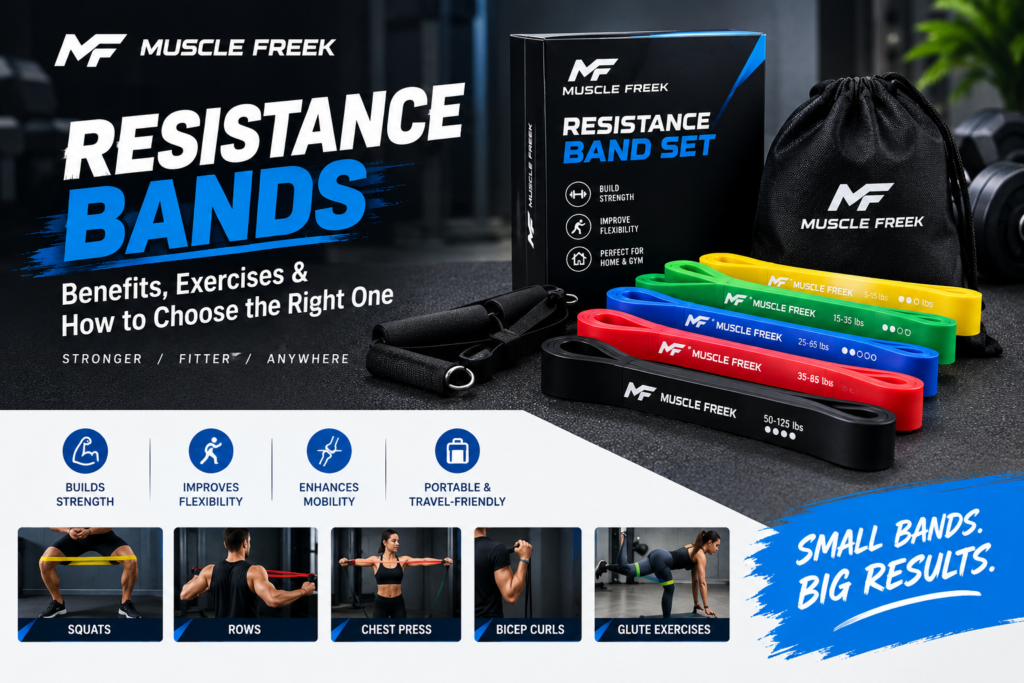
Muscle Freek resistance bands benefits and exercises
Uncategorized

Resistance Bands: Benefits, Exercises & How to Choose the Right One

Resistance bands are versatile workout tools that can help improve strength, flexibility, mobility, and overall fitness. They are lightweight, easy to carry, and suitable for both home workouts and gym training. Whether you are a beginner or an experienced fitness enthusiast, choosing the right resistance band can make your workouts more effective. What Are Resistance Bands? Resistance bands are flexible elastic bands that create tension when stretched. Unlike traditional weights, they provide resistance throughout different movements and can be used for strength training, warm-ups, stretching, rehabilitation exercises, and mobility workouts. They are available in different resistance levels, allowing users to increase or decrease workout intensity according to their fitness level. Benefits of Resistance Bands 1. Great for Full-Body Workouts Resistance bands can be used to train almost every major muscle group. Exercises such as squats, rows, chest presses, shoulder raises, and glute exercises can all be performed with bands. 2. Easy to Use at Home One of the biggest advantages is convenience. You do not need a large home gym or expensive equipment. A resistance band can be stored in a small space and used for quick workouts at home. 3. Suitable for Beginners and Advanced Users Resistance bands come in different tension levels. Beginners can start with lighter resistance, while experienced users can choose heavier bands or combine multiple bands for greater challenge. 4. Portable and Travel-Friendly A resistance band is much easier to carry than dumbbells or other gym equipment. You can take it to the office, park, hotel, or anywhere you want to exercise. 5. Useful for Strength and Mobility Regular band exercises can support strength training while also helping with controlled movement, flexibility, and mobility. They can be included in warm-ups as well as complete workout routines. Best Resistance Band Exercises Here are some effective exercises you can add to your workout routine: Resistance Band Squats Stand on the band and hold the handles or ends near your shoulders. Lower your body into a squat and return to the starting position. This exercise primarily targets the legs and glutes. Resistance Band Rows Secure the band at a suitable anchor point and pull it toward your body while keeping your back controlled. Resistance band rows are useful for training the upper back and arms. Resistance Band Chest Press Anchor the band behind you and press your hands forward. This movement works the chest, shoulders, and triceps. Resistance Band Bicep Curls Stand on the middle of the band and curl your hands toward your shoulders. Keep your elbows close to your body throughout the movement. Resistance Band Glute Exercises Bands are especially useful for glute-focused exercises such as lateral band walks, glute bridges, and standing kickbacks. How to Choose the Right Resistance Band Choosing the right band depends on your fitness level, goals, and the exercises you plan to perform. Beginners: Start with light or medium resistance so you can learn proper technique. Intermediate users: Medium to heavy resistance can provide a greater challenge for strength workouts. Advanced users: Heavy bands or a combination of different resistance levels can be useful for more demanding exercises. A set containing multiple resistance levels is often a practical option because you can change the resistance depending on the exercise. Muscle Freek Resistance Band Set The Muscle Freek Resistance Band Set is designed for people who want a convenient workout option for home or gym training. With multiple resistance levels, you can select the appropriate tension for different exercises and gradually increase the challenge as your strength improves. Its compact design also makes it easy to store and carry, making it a useful addition to a home workout setup or gym accessories collection. Resistance Bands vs. Free Weights Resistance bands and free weights can both be useful for strength training, but they offer different advantages. Free weights provide a consistent load based on the weight of the equipment, while resistance bands create increasing tension as they are stretched. Bands are also generally easier to transport and require less storage space. For many people, combining resistance bands with other forms of strength training can create a more versatile workout routine. Frequently Asked Questions Are resistance bands good for beginners? Yes. Resistance bands are beginner-friendly because they are available in different resistance levels. Beginners can start with lighter tension and gradually progress. Can resistance bands build muscle? Yes. Resistance bands can provide enough resistance to challenge muscles and support muscle-strengthening workouts when exercises are performed with appropriate resistance and progressive overload. Can I use resistance bands for a full-body workout? Yes. You can train the legs, glutes, chest, back, shoulders, and arms with different resistance band exercises. What resistance band should a beginner use? A beginner should generally start with a light or medium resistance band that allows controlled movement and proper exercise technique. Are resistance bands useful for home workouts? Yes. Their compact size and versatility make them a convenient choice for home workouts, especially when space or equipment is limited. Final Thoughts Resistance bands are a simple and versatile fitness tool for strength training, mobility, warm-ups, and full-body workouts. They are suitable for beginners as well as experienced users and can be used almost anywhere. When choosing a resistance band, consider your current fitness level, workout goals, and the exercises you want to perform. A set with multiple resistance levels can be particularly useful because it gives you more flexibility as your training progresses. For a convenient and versatile workout setup, the Muscle Freek Resistance Band Set can be a practical addition to your gym accessories and home workout equipment.
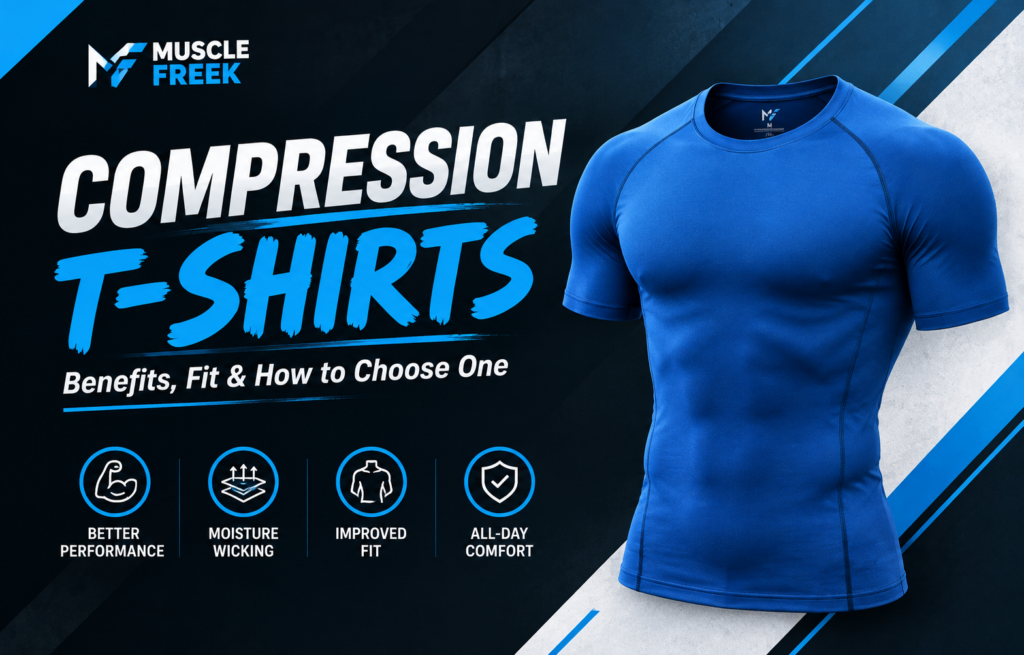
Blue compression T-shirt benefits, fit and buying guide
Uncategorized

Compression T-Shirts: Benefits, Fit & How to Choose One

Compression T-shirts are designed to fit closely against the body and provide a supportive feel during workouts, training sessions, and other physical activities. They are commonly made from stretchy, moisture-managing fabrics that allow freedom of movement while keeping the shirt close to the skin. But what are the actual benefits of wearing one, how should it fit, and what should you look for when buying one? This guide covers everything you need to know about choosing a compression T-shirt. What Is a Compression T-Shirt? A compression T-shirt is a close-fitting athletic shirt designed to provide a snug, supportive fit. Unlike a regular T-shirt, it is usually made with stretchable materials such as polyester, nylon, and elastane or spandex. The close fit allows the shirt to move with your body during activities such as weight training, running, cycling, and home workouts. Many compression shirts also use lightweight and breathable fabrics to help manage sweat during exercise. What Are the Benefits of Compression T-Shirts? 1. A Supportive Fit One of the main features of compression clothing is its close fit. The fabric stays close to the body instead of hanging loosely, which can make it comfortable for movements such as lifting, stretching, and running. 2. Moisture Management Many athletic compression shirts are made from moisture-wicking materials. These fabrics are designed to move sweat away from the skin and help it evaporate more efficiently. This can be particularly useful during intense workouts when you are likely to sweat more. 3. Freedom of Movement A good compression shirt should stretch with your body. This makes it suitable for exercises that involve a wide range of movement, including squats, bench presses, push-ups, and other gym exercises. 4. Lightweight Workout Layer Compression T-shirts can be worn on their own or underneath another workout shirt. Their lightweight construction makes them useful as a base layer during training. 5. Athletic Appearance The fitted design gives compression clothing a sporty and streamlined appearance. Many people choose it not only for workout comfort but also because it complements an active lifestyle. How Should a Compression T-Shirt Fit? A compression T-shirt should feel snug but not painfully tight. The fabric should stay close to your body without restricting normal breathing or movement. When checking the fit, look for these signs: If the shirt feels uncomfortable, causes excessive pressure, or significantly restricts movement, the size or design may not be right for you. Compression T-Shirt vs Regular T-Shirt The biggest difference is the fit and intended use. A regular T-shirt generally has a relaxed or standard fit and is designed for everyday comfort. A compression T-shirt is designed to sit much closer to the body and is commonly used for sports, training, and other physical activities. For everyday casual wear, a regular T-shirt may be more suitable. For workouts where you want a close-fitting athletic layer, compression clothing can be a useful option. How to Choose the Right Compression T-Shirt Choosing the right shirt involves more than simply picking your favorite color. Consider the following factors before buying. 1. Choose the Right Size Always check the manufacturer’s size chart before ordering. Chest, waist, and overall measurements can vary between brands. A compression shirt should be fitted without being uncomfortably restrictive. 2. Check the Fabric Look for lightweight, stretchable, and breathable materials. Polyester blends with elastane or spandex are commonly used because they provide both stretch and durability. 3. Consider Breathability If you train in a warm environment, breathable fabric can make a significant difference in comfort. Look for materials designed to allow airflow and manage moisture. 4. Look at the Seams Flat or smooth seams can help reduce rubbing during repeated movements. This is especially useful for longer workouts. 5. Think About Your Workout Your choice may depend on how you plan to use the shirt. Weight training, running, cycling, outdoor workouts, and home training may have different comfort requirements. 6. Pick a Style You Will Actually Wear Black, white, blue, and other versatile colors can easily fit into a gym wardrobe. Choose a design that works with your existing workout clothing and personal style. When Should You Wear a Compression T-Shirt? A compression T-shirt can be worn during many types of physical activity, including: It can also be used as a base layer underneath a loose-fitting workout shirt. How to Care for a Compression T-Shirt Proper care can help maintain the fabric’s stretch and shape. Follow the care instructions provided with the product. In general, avoid unnecessarily high heat when washing or drying performance clothing. Washing with similar fabrics and allowing the shirt to dry according to its care label can help maintain its condition over time. Frequently Asked Questions Are compression T-shirts good for workouts? Compression T-shirts can be useful for workouts because they provide a close fit, allow freedom of movement, and are often made from moisture-managing athletic fabrics. Should a compression T-shirt be very tight? No. It should be snug and close-fitting, but it should not cause pain, numbness, restricted breathing, or significantly limit movement. Can you wear a compression T-shirt under a regular T-shirt? Yes. Many people wear compression shirts as a lightweight base layer underneath a looser workout shirt. What material is best for a compression T-shirt? There is no single best material for everyone. Stretchable synthetic blends, such as polyester combined with elastane or spandex, are commonly used for athletic shirts because they can provide stretch, durability, and moisture management. How do I choose the correct size? Use the brand’s size chart and compare your measurements with the recommended chest and waist measurements. If you are between sizes, consider how the manufacturer recommends the garment should fit. Final Thoughts A compression T-shirt can be a practical addition to a workout wardrobe when you want a close-fitting athletic layer that moves with your body. The most important factors are comfort, appropriate sizing, breathable fabric, stretch, and suitability for your type of training. Before buying, check the size chart, understand the fabric, consider your workout environment, […]

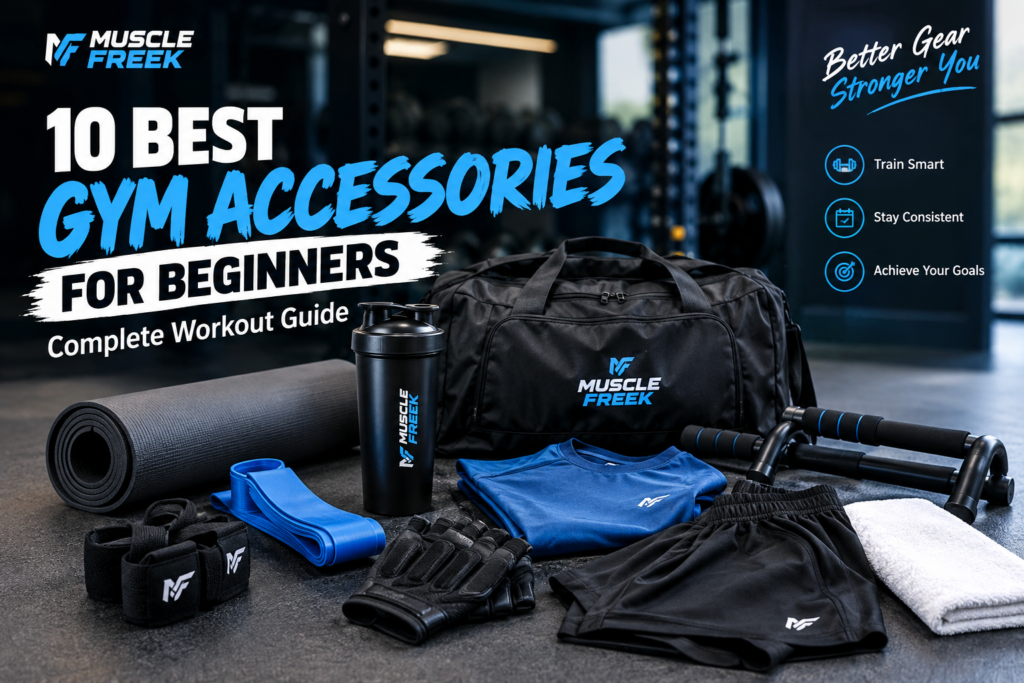
10 best gym accessories for beginners complete workout guide
Uncategorized

10 Best Gym Accessories for Beginners: Complete Workout Guide

Starting your fitness journey can be exciting, but choosing the right gym equipment can sometimes be confusing. Beginners do not need to buy every fitness product available. A few useful and practical gym accessories can make workouts more comfortable, organized, and effective. In this complete guide, we will discuss the 10 best gym accessories for beginners, their benefits, and how they can fit into your workout routine. Whether you work out at a commercial gym or prefer exercising at home, these accessories can help you stay prepared and consistent. What Gym Accessories Does a Beginner Need? Beginners should focus on accessories that support their workout goals without making their setup unnecessarily complicated. Useful options include a gym shaker bottle, resistance bands, wrist bands, comfortable workout clothing, gym shorts, a gym bag, and basic home workout equipment. The right accessories depend on your training style, fitness goals, budget, and whether you exercise at home or in a gym. 1. Gym Shaker Bottle A gym shaker bottle is one of the most practical accessories for beginners. It can be used to carry water, protein shakes, or other workout drinks. A good shaker bottle should be durable, easy to clean, comfortable to hold, and convenient to carry. Keeping one in your gym bag can make it easier to stay hydrated and prepared for your workout. Benefits of a gym shaker bottle include: 2. Resistance Bands Resistance bands are versatile accessories that can be used for strength training, warm-ups, stretching, mobility exercises, and home workouts. They are available in different resistance levels, so beginners can start with a lighter resistance and gradually increase the challenge. Resistance bands are also lightweight and easy to store. They can be useful for exercises such as band rows, lateral walks, shoulder exercises, and assisted movements. Benefits include: 3. Gym Wrist Bands Gym wrist bands can provide additional support and comfort during certain workouts. They can also help manage sweat during training. They may be useful during exercises that involve repetitive wrist movement or gripping. However, beginners should always focus on proper exercise technique and should not rely entirely on accessories for support. Important benefits include: 4. Compression T-Shirt A compression T-shirt is designed to fit closely against the body and is commonly worn during workouts, running, and other physical activities. For beginners, comfortable workout clothing can make exercise more enjoyable. Look for breathable, flexible material that allows you to move freely. When choosing a workout T-shirt, consider: The most important factor is choosing clothing that feels comfortable during your particular type of workout. 5. Gym Shorts Comfortable gym shorts are another useful addition to a beginner’s workout wardrobe. Good workout shorts should allow enough flexibility for exercises such as squats, lunges, running, stretching, and other movements. When choosing gym shorts, consider the fit, material, waistband, length, and freedom of movement. Useful features include: Comfortable clothing allows you to concentrate on your workout instead of constantly adjusting your clothes. 6. Workout Gloves Workout gloves can be useful for people who perform exercises involving dumbbells, barbells, or other equipment that requires gripping. Some beginners prefer workout gloves because they can improve grip comfort and reduce friction between the hands and exercise equipment. Workout gloves are optional, so you can decide whether they suit your personal training style and preferences. 7. Pull-Up Bar A pull-up bar can be a useful addition to a home workout setup. Depending on the type and installation method, it can be used for exercises such as pull-ups, chin-ups, and other bodyweight movements. A pull-up bar can be particularly useful for people who want to train their upper body at home without using large pieces of equipment. Benefits include: Always follow the manufacturer’s installation instructions and weight limitations before using a pull-up bar. 8. Gym Bag A gym bag is a simple but highly practical accessory. It allows you to keep your workout essentials together instead of carrying everything separately. A beginner’s gym bag may contain: Keeping your equipment organized can also make it easier to prepare for your workout and maintain a consistent routine. 9. Gym Towel A gym towel is a small but useful accessory that should not be overlooked. It can help manage sweat during workouts and support good hygiene. A lightweight and quick-drying towel is convenient to carry in a gym bag. When using shared gym equipment, maintaining good personal hygiene is important for everyone. 10. Workout Mat A workout mat is especially useful for beginners who perform exercises on the floor. It provides a more comfortable surface for stretching, core exercises, mobility work, and bodyweight movements. A workout mat can also help create a dedicated workout area at home. When choosing a workout mat, look for: How to Choose the Right Gym Accessories as a Beginner You do not need to purchase all ten accessories at once. Start with the products that match your workout routine and gradually add more equipment as your fitness needs develop. 1. Consider Your Workout Goal Your accessories should support your training goals. Strength training, cardio, mobility exercises, and home workouts may require different equipment. 2. Choose Comfort Comfort is important because you will use your accessories regularly. Choose workout clothing and equipment that allow you to move naturally. 3. Look for Quality A durable product can be more useful in the long term than an inexpensive accessory that needs to be replaced frequently. 4. Consider Portability If you travel or exercise in different locations, lightweight and portable accessories can be more convenient. 5. Set a Budget You do not need to purchase everything immediately. Start with essential accessories and gradually build your workout collection. Beginner Gym Accessories Checklist Here is a simple checklist for beginners: Frequently Asked Questions What are the most important gym accessories for beginners? Some of the most practical gym accessories for beginners include a shaker bottle, comfortable workout clothing, a gym towel, resistance bands, and a gym bag. The right combination depends on your workout routine and goals. Do beginners need […]

Scroll to Top