10 Best Home Workouts for Beginners
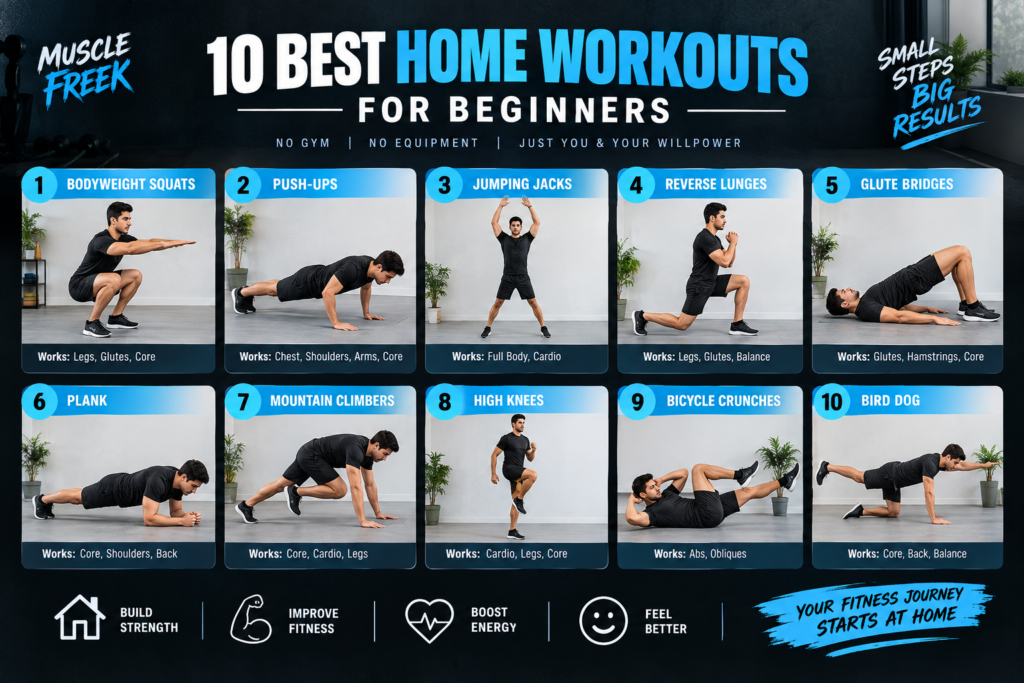
Starting a fitness journey does not always require a gym or expensive equipment. Home workouts for beginners are a simple way to build strength, improve mobility, increase endurance, and create a consistent exercise routine. With a small amount of space and a few minutes each day, beginners can perform effective exercises at home. If you are new to exercise, start slowly and focus on proper form rather than doing a large number of repetitions. The following 10 exercises are beginner-friendly and can be combined into a simple full-body workout. 1. Bodyweight Squats Bodyweight squats are one of the best exercises for beginners because they work the legs, glutes, and core. How to do it: Beginner target: 8–12 repetitions. 2. Push-Ups Push-ups are a classic bodyweight exercise that mainly trains the chest, shoulders, arms, and core. Beginners who find regular push-ups difficult can start with knee push-ups or incline push-ups using a stable elevated surface. Beginner target: 5–10 repetitions. 3. Jumping Jacks Jumping jacks are an easy way to raise your heart rate and add cardio to a home workout. Stand upright, jump while moving your feet apart and raising your arms, then return to the starting position. Beginner target: 20–30 seconds. 4. Reverse Lunges Reverse lunges strengthen the legs and glutes while also challenging balance and coordination. Step one foot backward, lower your body until your front leg is comfortably bent, and then push through the front foot to return to the starting position. Alternate legs with each repetition. Beginner target: 6–10 repetitions per leg. 5. Glute Bridges Glute bridges are useful for beginners who want to strengthen their glutes and posterior chain. Lie on your back with your knees bent and feet flat on the floor. Lift your hips toward the ceiling while keeping your core engaged, then slowly lower them. Beginner target: 10–15 repetitions. 6. Plank The plank is a simple exercise for developing core stability. It works the abdominal muscles and also requires support from several other muscle groups. Place your forearms on the floor, extend your legs behind you, and keep your body in a straight line. Avoid letting your hips drop or rise too high. Beginner target: 15–30 seconds. 7. Mountain Climbers Mountain climbers combine core work with a cardio component. They can help beginners practice coordination while increasing workout intensity. Start in a high-plank position. Bring one knee toward your chest and return it, then alternate with the other leg. Beginner target: 15–20 seconds. 8. High Knees High knees are a convenient cardio exercise that requires no equipment. They can be performed at a slower pace when you are just starting. Stand tall and alternately lift your knees toward your waist while moving your arms naturally. Beginner target: 20–30 seconds. 9. Bicycle Crunches Bicycle crunches target the abdominal area and involve rotational movement. Lie on your back with your knees bent. Bring one knee toward your chest while rotating your upper body toward it, then switch sides in a controlled movement. Beginner target: 8–12 repetitions per side. 10. Bird Dog Bird dog is a beginner-friendly movement that trains balance, coordination, and core stability. Start on your hands and knees. Extend one arm and the opposite leg at the same time while keeping your torso stable. Return to the starting position and switch sides. Beginner target: 6–10 repetitions per side. Simple Home Workout Routine for Beginners You do not need to perform all 10 exercises for a long workout. A simple beginner routine can include: Rest between exercises when needed. Beginners can start with 1–2 rounds and gradually increase the amount of exercise as their fitness improves. How Often Should Beginners Work Out at Home? A beginner can start with around 2–3 workout sessions per week, depending on their current fitness level and recovery. Rest days can help you recover between sessions. Consistency is more important than trying to complete an intense workout every day. As your fitness improves, you can gradually increase repetitions, duration, or the number of rounds. Benefits of Home Workouts for Beginners Home workouts can offer several practical benefits: Beginner Workout Tips If you are new to exercise, keep your first workouts simple. Warm up before exercising, learn the correct technique, and use controlled movements instead of rushing through repetitions. You should also listen to your body. Normal exercise fatigue is different from sharp or unusual pain. Stop an exercise if something feels wrong, and consider getting professional guidance if you have an injury, medical condition, or specific physical limitation. Frequently Asked Questions What is the best home workout for a beginner? There is no single exercise that is best for everyone. A combination of basic movements such as squats, push-ups, lunges, glute bridges, planks, and light cardio can provide a balanced starting point. Can beginners get fit with home workouts? Yes. Regular home exercise can help improve strength, endurance, mobility, and general fitness. Progress depends on consistency, exercise selection, intensity, recovery, and other lifestyle factors. How long should a beginner home workout be? A beginner can start with a short session of around 15–30 minutes and gradually increase workout duration as their fitness and confidence improve. Can I do these workouts without equipment? Yes. All 10 exercises listed in this guide can be performed without traditional gym equipment. A comfortable exercise mat can make floor exercises more convenient. How many days a week should a beginner exercise? Starting with 2–3 workout sessions per week is a practical approach for many beginners. Allow enough recovery between sessions and gradually increase activity as your body adapts. Final Thoughts The best home workouts for beginners are exercises that are simple enough to perform correctly and easy enough to repeat consistently. Squats, push-ups, lunges, glute bridges, planks, and other bodyweight movements can form the foundation of an effective beginner routine. Start with manageable repetitions, focus on technique, and increase your workload gradually. The goal is not to do the hardest workout on your first day—it is to build a routine you can continue […]